OVERVIEW
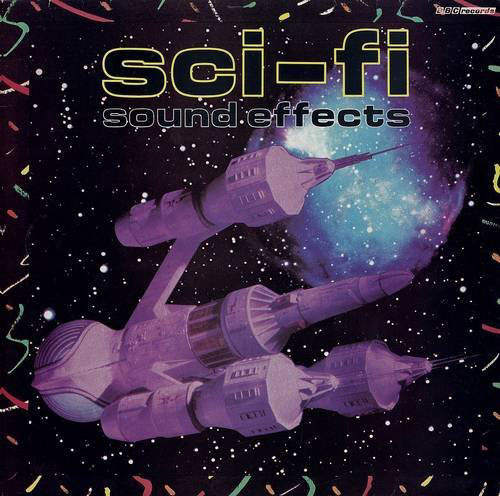
A classic album of 1970s and 1980s BBC sci-fi sound effects, remastered for CD
with original sleeve notes and artwork.
No sci-fi film, TV or radio series is
complete without its own unique and ample assemblage of way-out intergalactic
sound effects. In the 1970s and 1980s these were made on synthesisers,
harmonisers and other electronic sound benders, and constructed with the aid of
multiple multi-track tape decks. Each sound was made for a specific event in a
specific programme.
Yet each one stands on its own, whether it be a
straightforward laser or plasma blaster, or a spacecraft crashing into the sea
of a hitherto unknown planet. Reproduced here are classic sounds used by the
immortal Doctor Who, the intrepid Blake's 7, the zany intergalactic Hitchhiker's
Guide to the Galaxy, and the fantastical Earthsearch. Landing the TARDIS or
blasting away with a laser cannon is now within the reach of us all.
COMMENT
It’s 1981, and Tom Baker’s time as the Doctor had, literally, unravelled and DOCTOR WHO was hitting itself for “Six” as it entered a new era.
As a chubby child it was an interesting time; TARGET novelisations of the Time Lord’s adventures were as eagerly devoured as copious numbers of MARS chocolate bars (only 15p per bar from the school ‘tuck-shop’) and ‘roughage fart-friendly’ WEETABIX breakfast cereal ‘bales’ (as we used to called them as they, and still do, look remarkably like recently harvested ‘straw bales’) were consumed in order to gain the DOCTOR WHO monster stand-up figures. And from my bedroom came an array of new sounds that bewildered and amused my parents at the time that eventually leading them to ‘ask Santa’ for a pair of padded headphones to be delivered.
A new vinyl companion for the BBC MUSIC release of DOCTOR WHO – GENESIS OF THE DALEKS narrated original soundtrack had been released, and, 32 years ago, it was an essential part of any self-respecting sci-fi geek (I don’t think the word, ‘geek’, had been invented or was in wider usage then) would be proud to own but, now, its ownership would seem innocuous if not irrelevant.
With its re-issue by AUDIOGO under the “Vintage Beeb” sub-branding, BBC SCI-FI SOUND EFFECTS is still as innocuous but, in this digital era where ‘heritage’ is embraced and, frequently, sought, it may not be as irrelevant. Imagine creating your own BLAKE’S 7 ‘Orac’ or HITCHHIKER’S ‘The Book’ activation smartphone ringtone, or a TARDIS Cloister Bell digital Calendar reminder.
Extracted from four BBC television & radio drama productions, the re-issue takes listeners on a journey across time and space encountering the lumbering Bugblatter Beast of Traal that sounds like The Ents (from THE LORD OF THE RINGS), to the porcine acclimatisation of the Alzarian Marshmen (DOCTOR WHO – FULL CIRCLE), or looking down the barrel of an alien hand-weapon from the Liberator (BLAKE’S 7).
With every track assiduously cleaned-and-remastered (by audio genius and aficionado, Mark Ayres), we hear the ‘stereo’ tracks in a fashion that ensures that - probably for the first time – are heard as their creator would want them to be. Compared to the ‘needle skipping across a pitted plastic disc’ (i.e. playing the vinyl version), this digital version is categorically ‘High Definition’.
Heralding the start of the ‘album’, the iconic activation of The Book (THE HITCHHIKER’S GUIDE TO THE GALAXY) demonstrates how a simple four second sound effect can permeate time; it remains witty and appropriate as it was when the original Douglas Adam’s radio dramatisation was broadcast. It has not been bettered, and that is testament to the genius of its (aural) creator, Dick Mills. Yes, genius is a frequently overused word, bandied about like chewing spat out across the world’s collective pavements but, for Mills, it is apposite if only in the sphere of ‘entertainment’ and probably does not achieve the credit that he deserves (within the confines of DOCTOR WHO universe, Brian Hodgson only achieves appropriate credit for his definitive TARDIS sound effect). Over the decades, one of the BBC RADIOPHONIC WORKSHOP’s stalwarts, Mills has, like an ‘audio chef’, added the seasoning to what may have been bland productions, adding subtle spiciness and depth.
Mills’ stereo tracks created for DOCTOR WHO – THE LEISURE HIVE (1980) mirrored the series’ need for change (imposed by John Nathan-Turner); Planet Argolis, desolate, bathed in radiation is inhospitable and Mills captures this with affinity and precision in the same manner that John Constable observed and painted rural 19 th. Century Britain. They may have worked in different mediums but, nonetheless, the consistency of their work is remarkably astute.
Furthermore, such is the importance of Mills contribution to the series that numbers of his audio creations have osmotically transferred themselves to the NEW SERIES (2005 onwards) of DOCTOR WHO. Recently, the foreboding drone of the Cloister Bell have been heard in 2013’s SERIES 7 episode, HIDE.
I wonder if the American producers, SyFy, of the planned re-making of BLAKE’S 7 will delve into this BBC audio archive for the sound effects for the equally legendary Orac (the sentient computer with a hard-drive larger than some solar systems) or the equally legendary (and beautiful – designed by Mat Irvine) Liberator space-vessel? It would be a shame (read: tragedy) if they failed to do so as there has to be a thread of familiarity from the CLASSIC SERIES to the NEW SERIES.
To be honest, the effectiveness of the sound effects for EARTHSEARCH cannot be validated as I have not listened to the radio series.
Overall, BBC SCI-FI SOUND EFFECTS is an aural odyssey that fans will indulge themselves within, and, like a novel that you’ve enjoyed so much that you find it hard to discard it or donate it to a charity thrift store, may not be listened to frequently but it will encamp itself on your shelf as an aide memoire for a more generous time of your life.